|

 Dental hygienists
remove soft and hard deposits from teeth, teach patients how to practice
good oral hygiene, and provide other preventive dental care. They examine
patients' teeth and gums, recording the presence of diseases or
abnormalities. Dental hygienists
remove soft and hard deposits from teeth, teach patients how to practice
good oral hygiene, and provide other preventive dental care. They examine
patients' teeth and gums, recording the presence of diseases or
abnormalities.
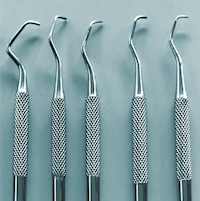
Dental hygienists use an assortment of different tools to
complete their tasks. Hand and rotary instruments and ultrasonic devices
are used to clean and polish teeth, including removing calculus, stains,
and plaque. Hygienists use digital and traditional x-ray machines to take
and develop dental pictures. They may use models of teeth to explain oral
hygiene, perform root planning as a periodontal therapy, or apply
cavity-preventative agents such as fluorides and pit and fissure sealants.
In some states,
hygienists are licensed to administer local anesthetics using syringes.
Some states also allow hygienists to place and carve filling materials,
temporary fillings, and periodontal dressings; remove sutures; and smooth
and polish metal restorations.
Dental hygienists also help patients develop and maintain
good oral health. For example, they may explain the relationship between
diet and oral health or inform patients how to select toothbrushes and show
them how to brush and floss their teeth.
Hygienists sometimes make a diagnosis and other times may
prepare clinical and laboratory diagnostic tests for the dentist to interpret. Hygienists
sometimes work chair side with the dentist during treatment.
Note: Some resources in this section are provided by the US
Department of Labor, Bureau of Labor
Statistics.
|
|